
VOLCANOS of OLOT
Looking for an Unforgettable Day Trip from the Pyrénées-Orientales?
Less than two hours from Perpignan lies one of southern Europe’s most unexpected landscapes — a region shaped by lava flows, dramatic craters, and ancient eruptions.
Welcome to the Garrotxa Volcanic Zone Natural Park, home to over 40 extinct volcanoes and more than 20 lava flows, making it the most important volcanic area on the Iberian Peninsula.
Even better? You don’t need to be a geologist to enjoy it. This is volcano walking made easy.
Yet instead of blackened rock and barren terrain, you’ll find dense forests, flower-filled meadows, and medieval villages — proof that nature always reclaims its ground.

Where Are the Olot Volcanoes?
The volcanoes sit around the Catalan town of Olot, just across the French border in northeastern Spain. Driving time from Perpignan: about 1 hour 30–45 minutes. That makes it one of the best nature escapes near the Pyrénées-Orientales.

Are the Olot Volcanoes Active?
No — and that’s good news for hikers. The last eruption occurred roughly 11,000 years ago, and scientists consider the area dormant. Today, the volcanic cones are blanketed in forest, wildflowers, and farmland — creating scenery that feels more Alpine than volcanic.
Source: Garrotxa Volcanic Zone Natural Park / Catalan tourism data.
Why This Natural Park Is So Special
Protected since 1985, the park spans roughly 15,000 hectares and is recognised for both geological and ecological value. Visitors come for some of the best hiking in Catalonia with exceptionally well-marked trails, medieval villages, outstanding local food and cooler summer temperatures than the coast
It’s a favourite with locals — yet still surprisingly under-visited by many residents of southern France.
Did You Know?
- The Fageda d’en Jordà beech forest is highly unusual because it grows on cooled lava at only about 500–600 metres above sea level — far lower than most European beech forests.
- One of the park’s most famous volcanoes, Croscat, reveals its internal structure thanks to past quarrying, creating a spectacular cross-section of volcanic layers.
- The crater of Santa Margarida contains a small hermitage right in its centre — one of the most photographed spots in the region.
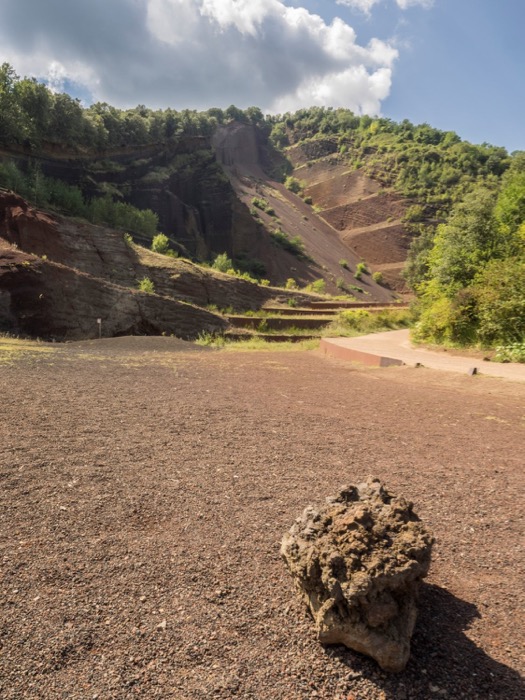
A Classic Walking Route (Volcà Santa Margarida & Croscat)
If you only do one route, make it this classic circuit.
This popular loop combines two of Garrotxa’s standout volcanoes with a peaceful crossing of the Fageda d’en Jordà, quiet, atmospheric, and almost fairytale-like — especially in autumn.
Start Point: Can Serra Visitor Area (.Allow: roughly 3–4 hours, depending on pace and stops.)
Located near Santa Pau, this is one of the main access points to the park and a good place to collect maps and trail advice.
Driving time: approximately 1 hr 40 minutes from Perpignan, depending on traffic.
Begin by heading into the shaded trails of the Fageda d’en Jordà. The terrain is gentle, making it ideal for families and casual walkers. Continue towards the picturesque hamlet of Sant Miquel Sacot and its Romanesque church — a perfect pause before the climb.
A steady ascent brings you to the rim of a perfectly circular Volcà de Santa Margarida crater. Walk down into the meadow to see the small chapel — it’s an unforgettable perspective on the volcano’s scale.
Follow marked paths toward Croscat volcano where exposed volcanic strata provide a rare geological insight into how the cone was formed. Follow the signs until the very heart of the volcano and enjoy the spectacular view (The information centre, “Can Passavent”, is not far away.
Return Loop
Circle back around the volcano on the right and follow dirt tracks toward Can Serra to complete the route.
Prefer Something Easier?
Perfect if you’re visiting with children or not keen on long hikes.
- Start from the car park between the two volcanoes for a shorter walk.
- Horse-drawn carriage rides operate seasonally.
- A small tourist train sometimes runs to Croscat — check locally for schedules.

Don’t Miss Santa Pau
Combine your outing with a visit to Santa Pau, one of Catalonia’s loveliest medieval villages. Wander narrow streets, explore the arcaded main square, and enjoy restaurants showcasing regional produce — Garrotxa is particularly known for its beans and traditional cuisine.
The Garrotxa region offers a refreshing contrast to the Mediterranean coast — greener, cooler, and wonderfully tranquil. Whether you’re a keen hiker, geology enthusiast, or simply searching for an inspiring day trip, these ancient volcanoes deliver one of the most unique landscapes within easy reach of southern France.
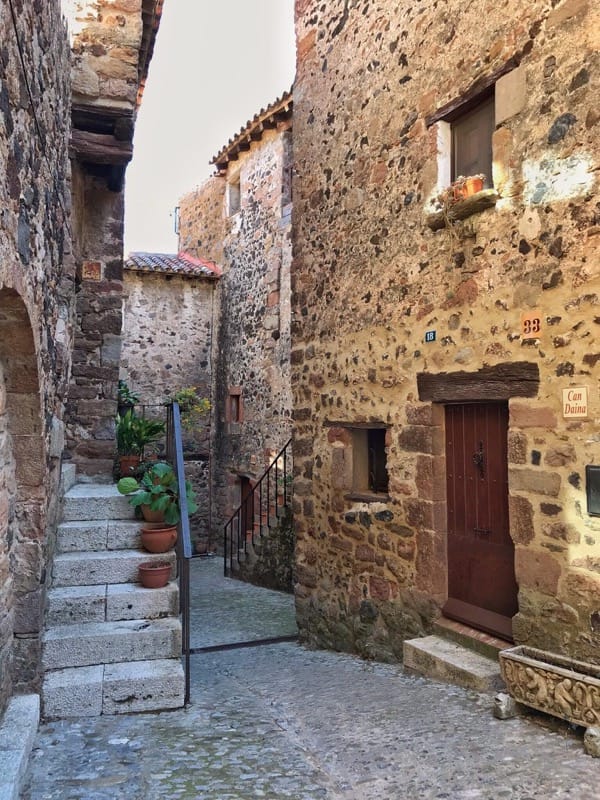
Tip: Visit in spring or autumn for the best colours and comfortable walking temperatures.