
Welcome to Eating Strange Things, a series exploring unusual, seasonal and sometimes surprising delicacies from Southern France. First up: sea urchins — spiny, briny and deeply rooted in Catalan winter tradition.
Sea Urchins – Aie aie aie!
If you’ve had the misfortune to accidentally step on a sea urchin (oursin) on bare footed paddles in the sea, you will be very aware how painful it can be. Though not actively aggressive, sea urchins have two defences to protect them from predators; long, venomous spikes that can puncture skin, and ‘pedicellariae’, forceps-like jaws that release venom. Ouch! Most Mediterranean species are not actually dangerous, but their spines can break under the skin and cause pain, swelling and sometimes infection. However, the good news is that you can get your own back – by eating their gonads!
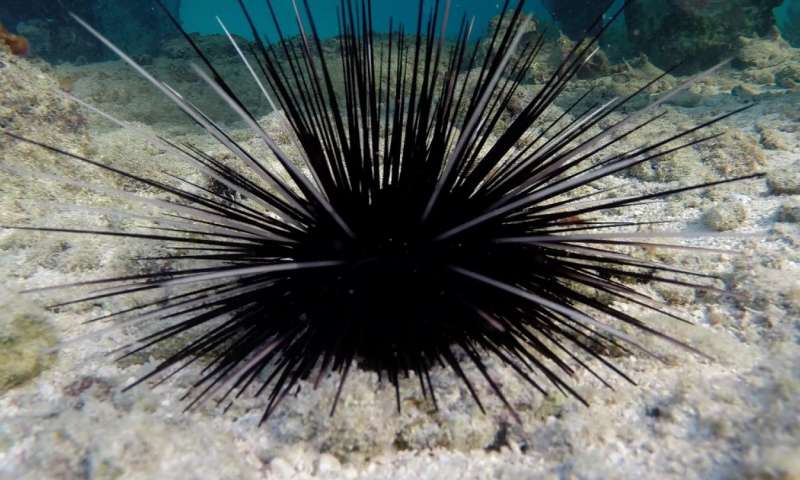
If stung…..
….soak the foot in hot (not scalding) water for 30–90 minutes to help neutralise venom, remove visible spines carefully with tweezers and disinfect.
Seek medical advice if pain persists, spines are deep, or signs of infection appear.
Revenge is Sweet
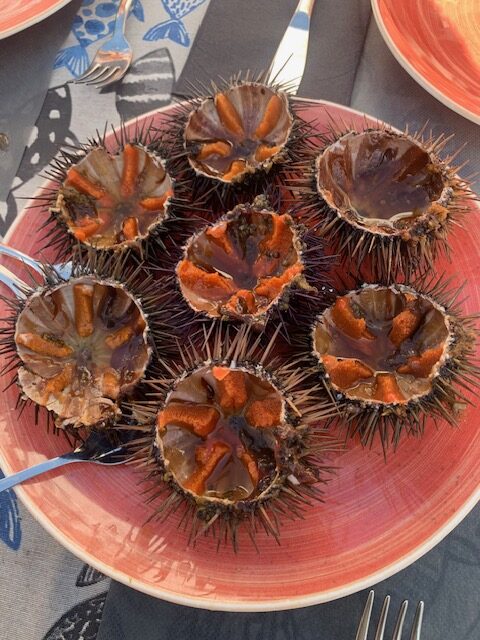
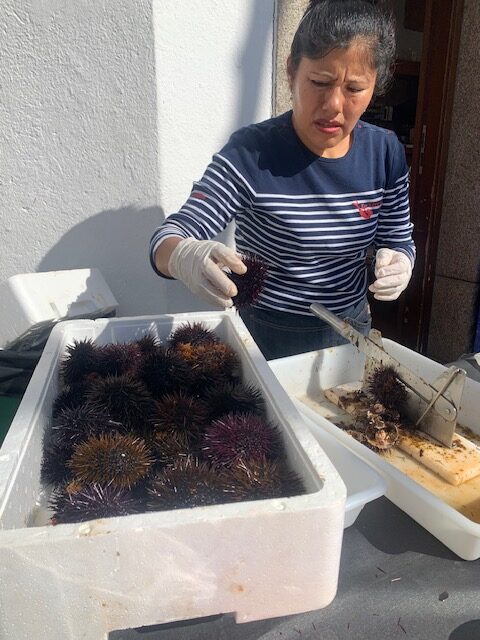
Hidden away under that thorny exterior lies a delicate, subtle, fresh-from-the-Med taste, sometimes compared to oysters. Eat them raw, with a spoon, straight out of the sea, maybe with a drizzle of lemon if you happen to take one to the beach, or check out the coastal tourist offices for an ‘oursindade’, a communal and convivial sea urchin fest held in many resorts along the coast. Look out for them too on the menu of specialist fish restaurants, ask for ‘uni’ in sushi restaurants – or why not save yourself a euro or two and dive for them yourself?
On the Rocks
Sea urchins have small tube feet that allow them to cling to rocks, so you’ll usually find them in the shallows of rocky coastal areas. Our own ‘Cote Rocheuse’ from Collioure to Cerbère and beyond is a perfect hunting ground. As well as your mask, snorkel and flippers, take a knife or gloves to help pry them from the rocks. Choose those with hints of red, green or purple rather than pitch black in colour. Bon app!
Sea Urchin Fishing Regulations
Sea urchin fishing is regulated in France. There are seasonal restrictions (typically November to April), quantity limits per person, and minimum sizes. Always check current local regulations before collecting
Here in the P-O, sea urchin harvesting (le ramassage/la pêche des oursins) is permitted but strictly regulated between 1 November and 15 April so gather ye urchins while ye may. 🙂 During this period, only sea urchins measuring at least 5 cm in diameter (excluding spines) may be collected. The limit is two dozen per person, with a maximum of six dozen per boat when there are three or more people on board. From 16 April to 31 October, sea urchin harvesting is completely prohibited. Scuba diving (bottle fishing) is strictly forbidden at all times. Within the Cerbère–Banyuls Marine Nature Reserve, sea urchin collection is prohibited year-round.

Healthy
Rich in protein and dietary fibre, minerals, and Beta Carotene, high in Vitamins C and A, usually found in dark leafy greens, and high in omega-3 fatty acids.
In southern France, particularly along the Catalan coast from Collioure to Cerbère and around Banyuls-sur-Mer, sea urchins are not a summer delicacy — they are very much a winter ritual. The season traditionally runs from November to early spring, when the roe is at its fullest and sweetest. Locals will tell you that once the sea warms, the flavour declines — which is why the legal season aligns closely with culinary tradition.
The “Oursinade” Tradition
In some coastal towns and villages, (Collioure, Banyuls-sur-Mer, Port-Vendres), winter weekends often feature communal sea urchin festivals known as oursinades. Long tables are set up by the harbour. Fishermen or volunteers open the urchins fresh on the spot. They are eaten standing up, with bread, salted butter and a glass of chilled white wine from the local vineyards. It’s simple, briny and unmistakably Mediterranean.
It’s less a gourmet experience and more a social one — windy quaysides, thick coats, laughter, and purple shells piling up in buckets. Older residents remember gathering them by hand as children, long before regulations tightened. Today, the practice is more controlled, but the sense of seasonal anticipation remains.
Did you know?
– Sea urchins live around 50 to 100 years.
– The word ‘urchin’ comes from Old French herichun meaning hedgehog (Modern French – hérisson)
– Sea urchin or ‘uni’ is considered an aphrodisiac in Japan.